
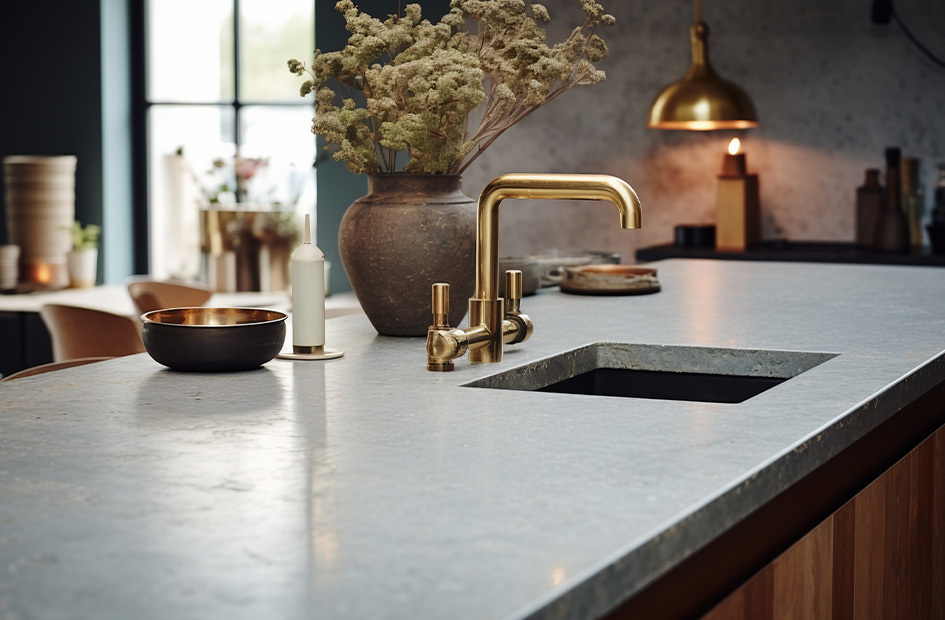
Solid surface materials are man-made, non-porous materials commonly used for countertops, sinks, and other surface applications. They are durable, easy to maintain, and come in a variety of colors and patterns, often mimicking natural stones like marble or granite. Below are the main types of solid surface materials:

Acrylic-Based Solid Surfaces
- Composition: Made primarily from acrylic resin and fillers like alumina trihydrate.
- Examples: Corian, HI-MACS, Avonite.
-
Key Features:
- o Non-porous, hygienic, and easy to clean.
- o Thermoformable, allowing for seamless, custom shapes.
- o Lightweight compared to stone-based materials.
- Common Uses: Kitchen countertops, bathroom vanities, integrated sinks, and backsplashes.
-
Advantages:
- o Repairable and renewable (scratches can be sanded out).
- o Wide range of colors and designs.
-
Disadvantages:
- o Can scratch and burn under extreme heat.
Polyester-Based Solid Surfaces
- Composition: Made from polyester resin and mineral fillers.
- Examples: Wilsonart Solid Surface, Meganite.
-
Key Features:
- o Offers brighter and more vibrant colors compared to acrylic-based surfaces.
- o Non-porous and hygienic.
- Common Uses: Kitchen countertops, decorative applications, and retail displays.
-
Advantages:
- o Cost-effective compared to acrylic-based options.
- o Glossy finish enhances aesthetics.
-
Disadvantages:
- o Brittle compared to acrylic-based materials, making it less suitable for high-impact areas.
Acrylic-Polyester Blend Solid Surfaces
- Composition: A hybrid of acrylic and polyester resins, combining the best properties of both.
- Examples: Some versions of Staron and Formica Solid Surface.
-
Key Features:
- o Balances the vibrant color options of polyester with the durability of acrylic.
- o Thermoformable and customizable.
- Common Uses: Residential and commercial countertops, healthcare settings.
-
Advantages:
- o Affordable compared to 100% acrylic solid surfaces.
- o Durable and repairable.
-
Disadvantages:
- o May have slightly lower heat resistance than pure acrylic.
Quartz-Based Solid Surfaces (Engineered Quartz)
- Composition: Made from natural quartz crystals, resin, and pigments.
- Examples: Silestone, Caesarstone, Cambria.
-
Key Features:
- o Non-porous, highly durable, and scratch-resistant.
- o Mimics the look of natural stone while being easier to maintain.
- Common Uses: High-traffic areas like kitchen countertops and bathroom surfaces.
-
Advantages:
- o Resistant to stains, scratches, and heat.
- o Low maintenance compared to natural stone.
-
Disadvantages:
- o Heavier and more expensive than acrylic or polyester solid surfaces.
- o Seams are visible, unlike pure solid surfaces.
Mineral-Based Solid Surfaces
- Composition: Contains a higher proportion of natural minerals like bauxite or marble dust mixed with resins.
- Examples: LG HI-MACS Marmo Collection, Avonite Surfaces Studio Collection.
-
Key Features:
- o Mimics natural stone with unique veining and texture.
- o Non-porous and low maintenance.
- Common Uses: Premium kitchen countertops, bathroom vanities.
-
Advantages:
- o Aesthetic appeal of natural stone with enhanced durability.
-
Disadvantages:
- o Higher cost compared to simpler solid surface types.
Recycled Solid Surfaces
- Composition: Made from recycled materials such as glass, paper, or fly ash, mixed with resins.
- Examples: PaperStone, IceStone, Durat.
-
Key Features:
- o Eco-friendly and sustainable.
- o Available in vibrant and unique designs.
- Common Uses: Eco-conscious projects, modern kitchen and bathroom countertops.
-
Advantages:
- o Environmentally friendly.
- o Durable and heat-resistant.
-
Disadvantages:
- o May have a higher price point due to sustainability factors.
Sintered Stone (Porcelain Surfaces)
- Composition: Made by compacting natural minerals and subjecting them to high heat.
- Examples: Dekton, Neolith.
-
Key Features:
- o Non-porous, extremely durable, and resistant to heat and scratches.
- o Mimics natural stone with ultra-thin and lightweight designs.
- Common Uses: Modern countertops, wall cladding, and outdoor applications.
-
Advantages:
- o UV-resistant, making it suitable for outdoor use.
- o Highly resistant to stains and scratches.
-
Disadvantages:
- o More expensive than traditional solid surfaces.
- o Requires professional installation.
Comparison Table
| Material Type | Durability | Heat Resistance | Scratch Resistance | Eco-Friendly | Customization |
|---|---|---|---|---|---|
| Acrylic-Based | High | Moderate | Moderate | Moderate | Excellent |
| Polyester-Based | Moderate | Moderate | Low | Low | Good |
| Acrylic-Polyester Blend | High | Moderate | Moderate | Moderate | Good |
| Quartz-Based | Very High | High | High | Moderate | Limited |
| Mineral-Based | High | Moderate | High | Low | Good |
| Recycled Solid Surfaces | High | Moderate | Moderate | High | Moderate |
| Sintered Stone | Very High | Very High | Very High | High | Limited |
Each type of solid surface material has its own strengths, so the choice depends on the specific application, budget, and desired aesthetic.