
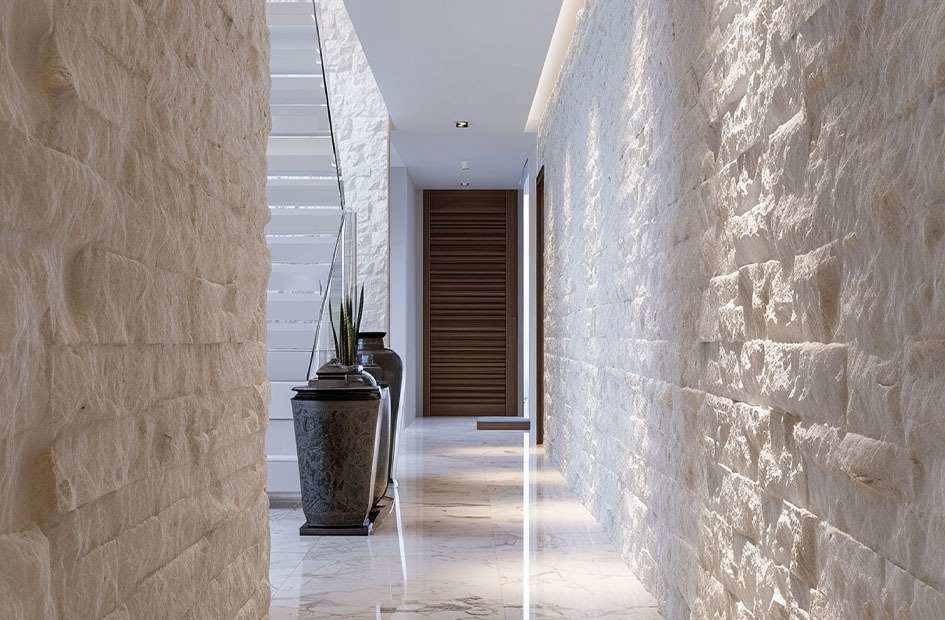
Natural stone limestone is a sedimentary rock primarily composed of calcium carbonate (CaCO₃), formed from the accumulation of organic materials such as shells, coral, and marine debris over millions of years. Its formation often occurs in shallow marine environments, giving it a distinctive, fine-grained texture and earthy appearance. Limestone is available in a variety of natural colors, including beige, cream, gray, and tan, making it a versatile and timeless material for both interior and exterior design. It often contains visible fossils and shell fragments, adding to its unique character and organic charm.
Limestone is widely used in flooring, wall cladding, fireplaces, columns, and outdoor patios due to its natural beauty and adaptability. It is also a popular material for architectural features such as arches and facades. While limestone provides a classic and elegant look, it is a softer and more porous stone compared to granite or marble, making it more susceptible to scratches, staining, and weathering. Proper sealing and maintenance are recommended to protect its surface and enhance durability. With its timeless appeal and natural elegance, limestone remains a favored choice for creating warm and inviting spaces.

Beige Limestone
- Examples: Moleanos, Jura Beige, Crema Luna, Capri.
- Appearance: Warm beige tones with subtle, uniform patterns or light veining.
- Uses: Flooring, countertops, wall cladding, outdoor paving.
- Key Features: Neutral and timeless, pairs well with various design styles.
White Limestone
- Examples: Vratza, Bianco Avorio, Thala White, White Fossil.
- Appearance: Crisp white or off-white with minimal veining, sometimes featuring fossilized patterns.
- Uses: Elegant flooring, walls, fireplaces, and bathrooms.
- Key Features: Clean and minimalist, ideal for contemporary or classic designs.
Gray Limestone
- Examples: Azul Valverde, Grigio Alpi, Tundra Gray, Dove Gray.
- Appearance: Shades of gray ranging from light to dark, often with soft veining or cloudy textures.
- Uses: Flooring, countertops, exterior facades.
- Key Features: Sleek and modern, perfect for industrial or minimalist designs.
Black Limestone
- Examples: Kilkenny Black, Black Limestone Kota, Pietra Basaltina.
- Appearance: : Dark tones with subtle variations, sometimes with fossil or shell imprints.
- Uses: Countertops, backsplashes, patios, and accent walls.
- Key Features: Dramatic and bold, provides contrast in both modern and traditional designs.
Brown Limestone
- Examples: Sinai Pearl, Marron Imperial, Crema Cappuccino.
- Appearance: Earthy tones of brown with subtle veining and warm textures.
- Uses: Flooring, outdoor paving, and decorative wall cladding.
- Key Features: Rustic and cozy, ideal for earthy, natural aesthetics.
Fossilized Limestone
- Examples: Jura Beige Fossil, Fossil Brown, Moroccan Fossil.
- Appearance: Unique patterns featuring fossil imprints of shells, plants, and marine organisms.
- Uses: Decorative walls, countertops, tabletops, and feature pieces.
- Key Features: Unique and artistic, adds character and a sense of history to spaces.
Blue Limestone
- Examples: Azul Lagos, Azul Aran, Belgian Blue.
- Appearance: Soft blue or bluish-gray tones, often with subtle patterns or veins.
- Uses: Outdoor paving, flooring, countertops.
- Key Features: Cool and calming, works well in coastal or contemporary designs.
Golden Limestone
- Examples: Jerusalem Gold, Giallo Antico, Moca Cream.
- Appearance: Warm golden and yellow hues with soft veining.
- Uses: Flooring, cladding, decorative features.
- Key Features: Luxurious and inviting, adds warmth to interiors and exteriors.
Textured or Brushed Limestone
- Examples: Any limestone with finishes like tumbled, brushed, or bush-hammered.
- Appearance: Textured surface with a rustic or aged look.
- Uses: Outdoor paving, patios, pool surrounds, and rustic interiors.
- Key Features: Non-slip surface, ideal for outdoor and high-traffic areas.
Cream Limestone
- Examples: Moca Cream, Crema Marfil (technically a marble but often marketed as limestone), Halila.
- Appearance: Light cream tones with delicate veining or uniform patterns.
- Uses: Wall cladding, flooring, and countertops.
- Key Features: Soft and elegant, complements neutral and warm palettes.
Rustic Limestone
- Examples: Provence Limestone, French Limestone, Cotswold Stone.
- Appearance: Earthy tones with an aged, weathered finish.
- Uses: Garden pathways, fireplaces, exterior facades.
- Key Features: Perfect for traditional or countryside-inspired designs.
Dense Limestone
- Examples: Indiana Limestone, Cordova Cream.
- Appearance: Dense, uniform texture with minimal veining.
- Uses: Building facades, flooring, and structural elements.
- Key Features: High density and durability, suitable for both interior and exterior applications.