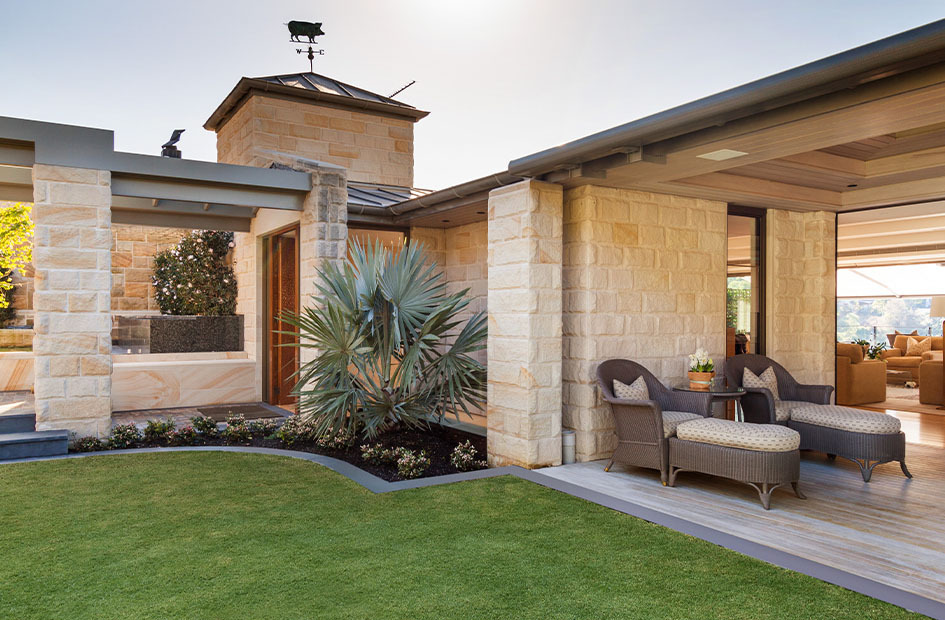
Natural stone sandstone is a sedimentary rock composed primarily of sand-sized mineral particles, mainly quartz and feldspar, bound together by natural cementing materials such as silica, calcium carbonate, or iron oxide. It forms over millions of years through the compression of sand deposits, often in riverbeds, deserts, and beaches, giving it a layered appearance. Sandstone is renowned for its warm, earthy tones, including shades of beige, tan, red, brown, and gold, as well as its natural texture and grainy surface, which add character and charm to any design.
Sandstone is a versatile material widely used in paving, flooring, wall cladding, garden features, and outdoor facades due to its durability and weather resistance. Its natural slip-resistant surface makes it ideal for outdoor patios, pool surrounds, and walkways. While sandstone is relatively soft compared to granite, it can be easily cut and shaped for custom architectural elements like columns, fountains, and fireplaces. To maintain its beauty and longevity, sandstone requires sealing and periodic maintenance to protect against moisture absorption and staining. Its natural, rustic appeal makes it a popular choice for both modern and traditional designs, blending seamlessly with outdoor landscapes and indoor spaces.
Based on Color
Beige Sandstone
- Examples: Dholpur Beige, Mint Sandstone.
- Appearance: Soft, neutral beige tones with minimal variation.
- Uses: Flooring, patios, wall cladding.
- Key Features: Timeless and versatile, works well in traditional and modern designs.
Brown Sandstone
- Examples: Teakwood Sandstone, Chocolate Sandstone.
- Appearance: Warm brown tones, sometimes with wood-like grain patterns.
- Uses: Garden pathways, wall cladding, decorative elements.
- Key Features: Rustic and earthy, ideal for natural or countryside aesthetics.
Red Sandstone
- Examples: Agra Red Sandstone, Rajasthan Red.
- Appearance: Deep red hues with occasional veining or speckling.
- Uses: Monumental architecture, feature walls, outdoor paving.
- Key Features: Bold and striking, historically used in heritage buildings.
Gray Sandstone
- Examples: Kandla Gray, Autumn Brown.
- Appearance: Cool gray shades, sometimes with hints of brown or green.
- Uses: Modern flooring, exterior cladding, and pathways.
- Key Features: Sleek and contemporary, ideal for minimalist designs.
Golden Sandstone
- Examples: Jaisalmer Yellow, Golden Fossil Sandstone.
- Appearance: Warm golden hues with fossilized patterns or texture.
- Uses: Decorative walls, outdoor patios, fireplaces.
- Key Features: Bright and inviting, adds warmth and richness.
White Sandstone
- Examples: Rainbow Sandstone, White Mint.
- Appearance: Pale white to light cream tones, sometimes with subtle streaks or textures.
- Uses: Flooring, wall cladding, and decorative pieces.
- Key Features: Clean and elegant, ideal for bright and airy spaces.
Green Sandstone
- Examples: Raj Green Sandstone.
- Appearance: Soft green tones with earthy variations.
- Uses: Garden paving, pool surrounds, outdoor cladding.
- Key Features: Natural and calming, perfect for landscaping.
Based on Finish
Honed Sandstone
- Appearance: Smooth, matte surface with a muted finish.
- Uses: Indoor flooring, countertops, wall cladding.
- Key Features: Elegant and understated, suitable for refined interiors.
Polished Sandstone
- Appearance: Glossy, reflective surface that enhances color.
- Uses: Decorative applications, countertops, tabletops.
- Key Features: Luxurious and vibrant, ideal for high-end designs.
Natural Cleft Sandstone
- Appearance: Rugged, uneven surface that highlights the stone's natural texture.
- Uses: Outdoor paving, patios, garden paths.
- Key Features: Rustic and raw, adds character to outdoor spaces.
Brushed Sandstone
- Appearance: Lightly textured surface with a soft, worn feel.
- Uses: Wall cladding, flooring.
- Key Features: Subtle texture, combines durability with style.
Filled and Unfilled Travertine
- Appearance: Aged, weathered surface with rounded edges.
- Uses: Garden pathways, rustic interiors.
- Key Features: Classic and vintage, ideal for traditional designs.
Based on Texture and Pattern
Fossil Sandstone
- Examples: Golden Fossil Sandstone.
- Appearance: Features imprints of fossils, shells, or plant remains.
- Uses: Decorative walls, unique flooring, feature pieces.
- Key Features: Artistic and unique, adds a natural historical element.
Striped or Veined Sandstone
- Examples: Teakwood Sandstone.
- Appearance: Linear or wavy grain patterns resembling wood or flowing water.
- Uses: Wall cladding, countertops, and decorative flooring.
- Key Features: Striking visual appeal, works as a statement piece.
Based on Origin
Indian Sandstone
- Examples: Kandla Gray, Mint, Rainbow Sandstone.
- Key Features: Wide variety of colors and patterns, durable and weather-resistant, commonly used for export worldwide.
Australian Sandstone
- Examples: Sydney Sandstone, Hawkesbury Sandstone.
- Key Features: Known for warm beige and golden hues, often used in architectural projects and landscaping.
British Sandstone
- Examples: Yorkstone.
- Key Features: Dense and durable, typically gray or buff tones, ideal for paving and heritage projects.
American Sandstone
- Examples: Colorado Buff Sandstone.
- Key Features: Earthy tones and durability, often used in rustic designs.
Sandstone slabs are versatile and suitable for diverse applications, from functional outdoor spaces to elegant interiors. They are easy to work with and can be customized through different finishes to achieve the desired aesthetic and durability.