
Installing marble or granite stone facades requires specific techniques to ensure durability, stability, and aesthetic appeal. Here are the most common methods:
Wet Fixing Method
This traditional method involves using a cement-based mortar to adhere the stone to the building surface.
Process:
- Preparation: The substrate is cleaned and leveled.
- Mortar Application: A layer of mortar is applied to both the substrate and the stone.
- Placement: The stone is pressed into the mortar and adjusted for alignment.
- Curing: The mortar is left to cure and bond the stone securely.
Pros:
- Cost-effective.
- Suitable for small-scale projects.
- Strong adhesion in dry climates.
Cons:
- Time-consuming.
- Less durable in areas with freeze-thaw cycles.
- Difficult to replace or repair individual stones.
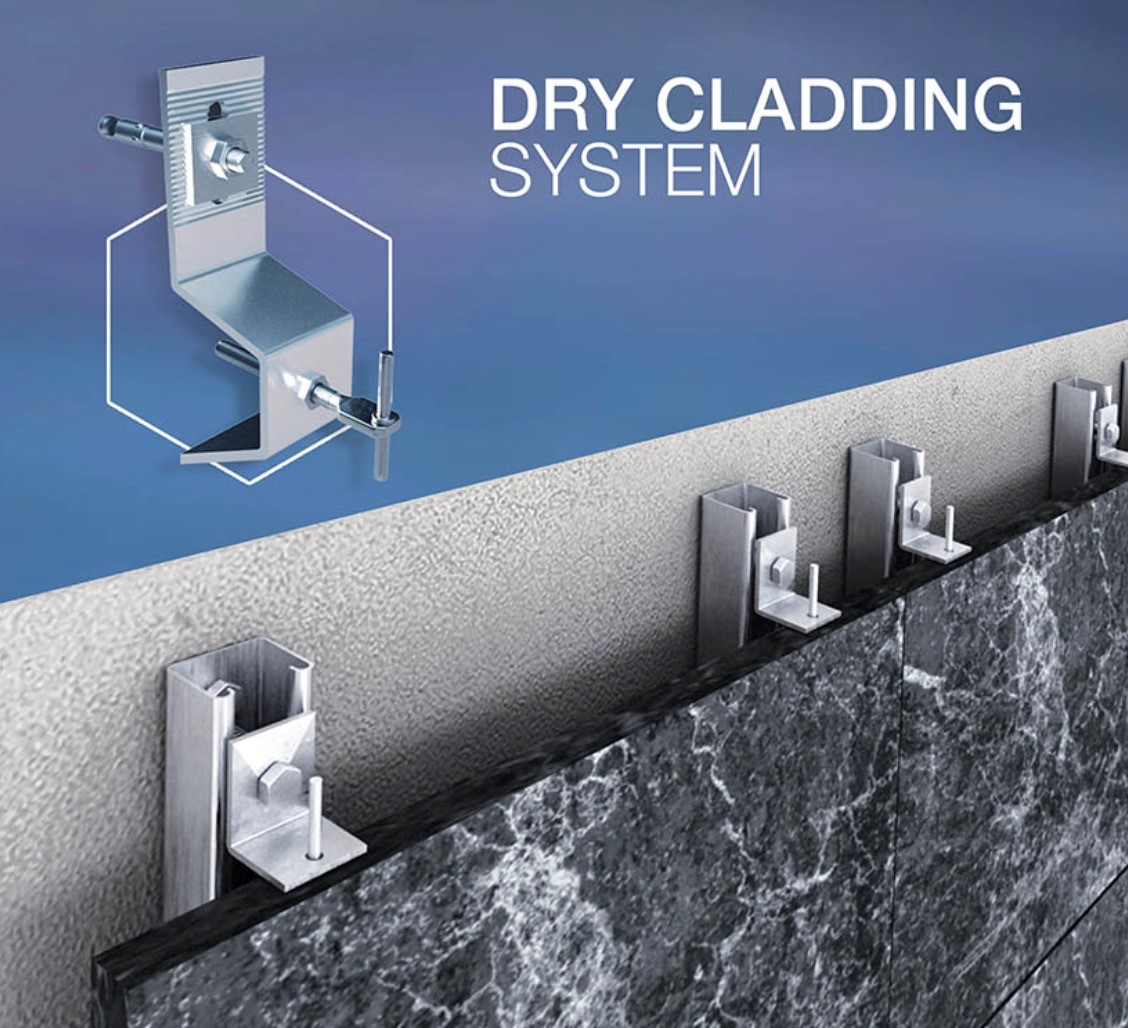
Dry Cladding Method
This modern technique involves fixing the stones using mechanical anchors or brackets, creating an air gap between the stone and the wall.
Process:
- Framing: A structural framework (usually aluminum or steel) is installed on the wall.
- Anchoring: Stone panels are attached using mechanical anchors, clamps, or brackets.
- Alignment: Spacers ensure uniform gaps between panels.
Pros:
- Durable and long-lasting.
- Easier maintenance and replacement.
- Reduces thermal expansion and contraction issues.
- Provides insulation and ventilation with the air gap.
Cons:
- Higher initial cost.
- Requires skilled labor.
- More complex installation.
Adhesive Fixing Method
This method uses specialized stone adhesives to bond the panels directly to the substrate.
Process:
- Surface Preparation: Both the stone and substrate are cleaned and primed.
- Adhesive Application: High-strength stone adhesive is applied to the substrate or the back of the stone.
- Placement: The stone is pressed into place, and alignment is checked.
Pros:
- Faster installation.
- Lightweight and less invasive.
- Flexible for complex shapes.
Cons:
- May not be suitable for large or heavy panels.
- Adhesives can degrade over time.
Undercut Anchor System
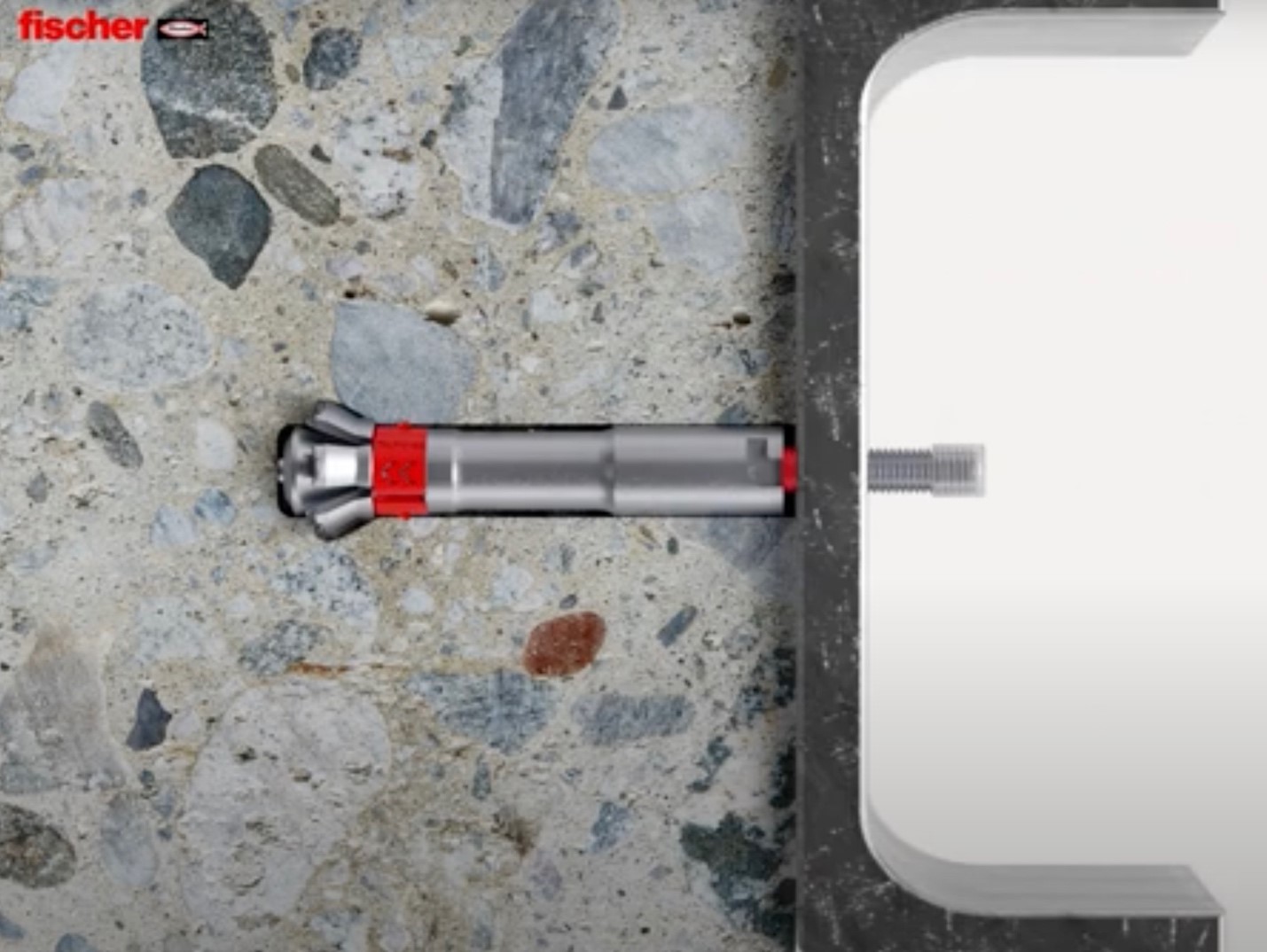
This specialized system involves drilling undercut holes into the stone and using concealed anchors to hold the panels.
Process:
- Undercutting: Holes are drilled into the back of the stone.
- Anchor Installation: Special anchors are inserted and fixed to the substrate.
- Panel Placement: The stone is attached using brackets or clips.
Pros:
- Provides high strength and stability.
- Ideal for large-format panels.
- Allows for precise alignment.
Cons:
- Expensive and requires advanced tools.
- Skilled labor is necessary.
Kerf System
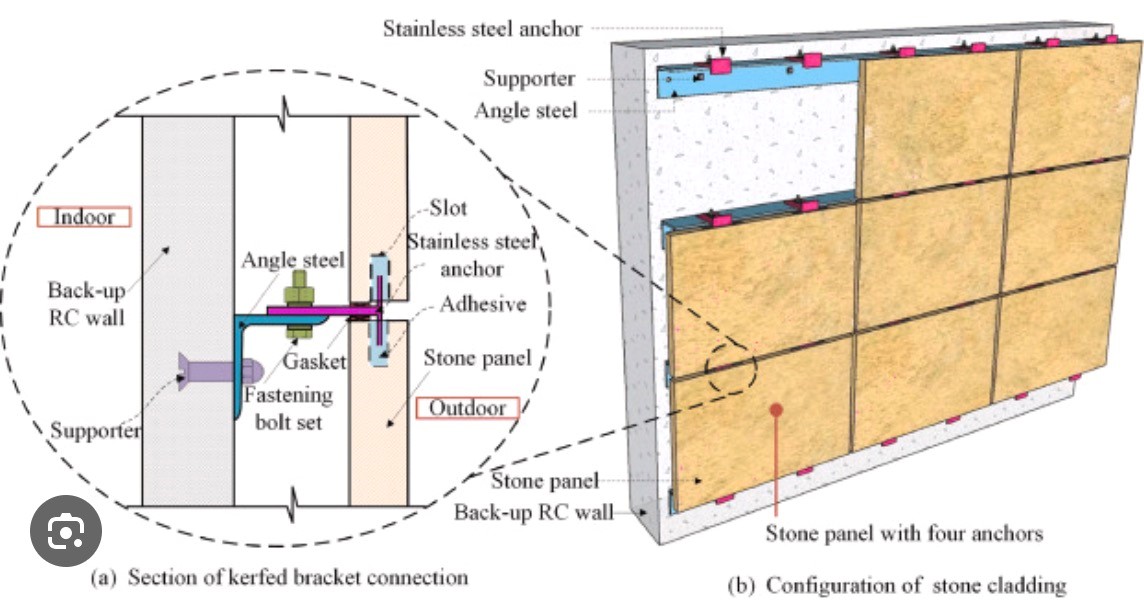
This method involves creating grooves (kerfs) in the edges of the stone and inserting them into a framework.
Process:
- Grooving: Kerfs are cut into the edges of the stone panels.
- Bracket Fixing: Metal brackets or clips are inserted into the kerfs and attached to the framework.
- Alignment: Panels are adjusted for proper fit.
Pros:
- Reliable and durable.
- Concealed fixing mechanism.
- Good for large and heavy panels.
Cons:
- Labor-intensive.
- Requires precise fabrication.
Hybrid Method
A combination of wet fixing and dry cladding, this method uses mechanical anchors along with adhesive or mortar.
Pros:
- Offers the advantages of both techniques.
- Enhances stability and durability.
Cons:
- Complex and requires skilled labor.
- More expensive than single methods.
Factors to Consider
- Building Height: Taller buildings typically use dry or hybrid methods for safety and flexibility.
- Climate: Freeze-thaw cycles, humidity, and temperature fluctuations impact method choice.
- Stone Type: Heavier stones often require mechanical anchoring.
- Aesthetics: Visible vs. concealed fixing methods.
- Budget: Some methods, like dry cladding, are costlier but more durable.
By choosing the appropriate method based on these factors, you can ensure a successful and lasting facade installation.